Category Archives: Parenting

Stay Confident. Stay Humble. Stay Curious.

When you don’t get what you want, but perhaps get what you need.

My alter ego is an educational consultant. As my children teach me about parenting and about myself, my parenting informs my work, as I seek that my work as an Independent Educational Consultant inform my parenting.

So when my son called me recently to express his worry and frustration about the possibility of not getting the summer placement he had been banking on, I found myself reverting to an idea that I had been toying with for a while now, namely, friction.

For any Mario Kart fan reading this, you would know that straying from the course, if you do not have a mushroom or a star, slows you down drastically due to the friction induced. If you are boosted, then it’s not a problem (in fact it acts as a shortcut) but if you are not, straying from the course can slow you down drastically, leading to delays on arrival. Similarly, not every shortcut on the course gets you to the end quicker. But I digress.

My son has faced disappointment before. He did not get the offers he was coveting from his first and second-choice universities and had to settle for the third on his list. And while he was unhappy with his lot and often reflects on “what could have been if”, he has had one amazing opportunity after another, including being noticed by professors, offered work placements, and attending one of the world’s leading academic institutions as an exchange student for a year.

Yet still, when he sets a goal, he remains hyper-focused on it. Like a horse with blinders on, he can only see ahead. While I applaud his focus and his drive, I keep having to remind him that he should consider if maybe, he just may be straying off his intended course and that the friction (not getting the placement) is an indication of that? Is it possible that, by not getting what he wants, he gets what he needs?

In his 2005 commencement speech at Stanford University, Steve Jobs famously recounted how dropping out of Reed College had freed him up from taking the courses he had to take to take the courses he was curious about. He had the confidence in his abilities to work things out, the humility to sleep on floors and return Coke bottles for food, and the curiosity to drop in on classes he found interesting and wanted to know more about, including the oft-cited Typography class.

He also recounted how getting fired from Apple was the best thing that could have ever happened to him. “The heaviness of being successful,” Jobs said, “was replaced by the lightness of being a beginner again, less sure of everything. It freed me to enter one of the most creative periods of my life.”

At that point in his life, Jobs did not get what he wanted, but he probably got what he needed. The space to remove his blinders and have a look around. During that period, he maintained the confidence, humility, and curiosity that he had in college and that ultimately propelled him to the helm of one of the biggest success stories of our time.

Remaining focused on one goal keeps us from spotting other opportunities that may exist, opportunities that will ultimately get us to our destinations, or in this case, destinies, more smoothly and help us grow along the way, because they align with our strengths, our aptitudes and our curiosities.

“You can’t connect the dots looking forward,” Jobs said. “You can only connect them looking backward—so you have to trust.” Trusting that we are on a path, that we do not always know what is around the corner but believing in staying on the course will ultimately make for a smoother and, most probably, faster ride.

So how do you tell if you are on the course? Well, how much friction is there under your wheels? How clunky is your ride? How hard are you having to push? Who is getting past you? Jobs ended his speech by wishing the Stanford graduates to “stay hungry, stay foolish.” In a similar vein, I wish for my son, as I wish for the students I work with, to stay confident, stay humble, stay curious. And then to wish for a star.
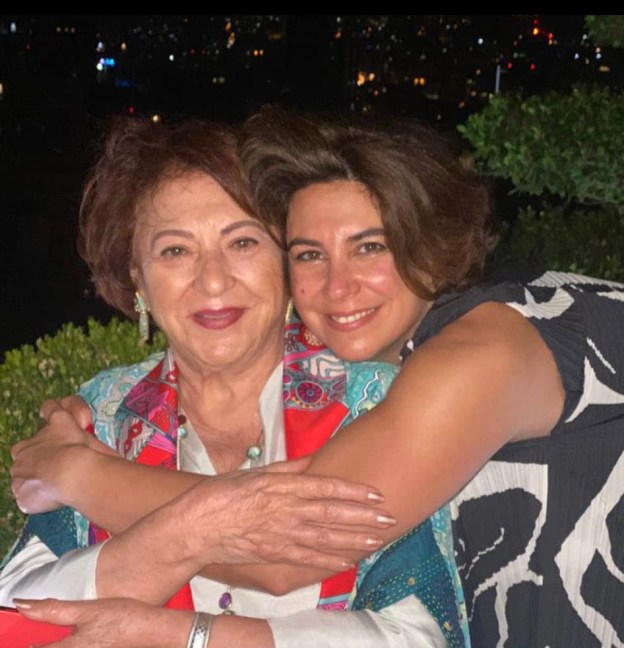

Ode to my mother

Lessons learned from a lifetime of adoration

A few years ago, I sought the counsel of a therapist. I didn’t really know why at the time but it was most probably prompted by the complex relationship I shared with my mother—a journey that you may have ventured on or will someday. Such is the power of mothers, an influence that often lingers even when we seek to break free from it. We mothers, unwittingly or not, inherit this remarkable ability to shape the lives of our children, occasionally repeating the very patterns we vowed to avoid.

As a child, I adored my mother. As an adult, I still do. I adored her so much that I could not fathom why she wasn’t reciprocating and chose also to love others (I have four older siblings). I yearned for her attention, puzzled by her choice to spend time with friends rather than shower me with her undivided focus. I craved her presence, wishing she would cater to my every need, whim, and desire. I couldn’t understand why she wasn’t my devoted servant. After all, so many of my friends seemed to have their mothers doting on them incessantly.

Little did I realize that beneath this perceived neglect lay a treasure trove of life lessons, perhaps the most crucial being the one I treasure most. Here’s what I’ve learned from a lifetime of adoring my mother:

  • The value of timeless elegance and ageless glamour. You are never too old to be glamorous. Keep on updating your wardrobe, buy new shoes and bags. And always accessorize, even when alone at home.
  • The significance of self-care. Self-care is a necessity, a testament to self-worth, not merely a privilege. Regularly pamper yourself with blow-dried hair, vibrant nail polish, and the allure of new makeup.
  • The art of generosity. Keep your fridge well-stocked and your front door open. You will never be lonely if you offer to feed people.
  • The appreciation of beauty. Infuse your living space with the charm of flowers, even if it means plucking them from a nearby bush or a forgotten garden.
  • The power of a smile. Even when delivering candid feedback or a pointed remark, do so with kindness and a warm smile. It’s amazing how gracious words wrapped in a smile are more readily accepted.
  • The value of friendships. Keep your children close and your friends closer. Your children are precious but you’ll probably have more fun with your friends. Prioritize time for them. They’ll be there when you need them.
  • The essence of curiosity. Nothing will keep you younger than the continuous hunger to know new things. Stay interested to stay interesting.

But if I had to pick the one lesson I have learned from my mother, it is this:

My time has value. I have value.

People often commend me on raising my three children, of whom I am immensely proud. They express surprise at our continued closeness as a family, even now that they’ve grown up. I credit this to this secret formula from my mother’s lab: when you appreciate your own time and worth, others will do the same.

In retrospect, I recognize that my mother’s approach of not fawning over me (and hence me not fawning over my own children)—stepping away from my demands, seeking her own sanctuary (been there, done that), gently silencing me during her conversations with friends (guilty), and prioritizing her own activities over chauffeuring me (ahem)—wasn’t an absence of love. Instead, it was a gift of space, a lesson in self-sufficiency, and the most valuable lesson of all: Even as a mother, I am first and foremost me. My time holds significance, and I need not wait for others to acknowledge it. I entertain myself, for my time has value. I care for myself, for I have value. And for that, I am, and will be eternally grateful.

On parent-counselling through the university application process

This article also appears at www.uni-versed.com

Yesterday my son fired me. As his admissions counsellor, I am devastated—no one likes to lose a client. As his mother, I think he did the right thing. I had pushed too hard, tightened the grip a little too much. I think I may even have been rude.

Now, I can finally stop hounding him about how he is not doing enough to prepare for his application to the highly selective (or rejective) university of his choice and start being more of an emotional support in this very stressful phase of his life.

As his counsellor, I know he needn’t be stressed if he is putting in the work necessary to become the highly academic student his chosen university is looking for. I even told him exactly what he needs to be doing. As his mother, I know he will eventually find his path, regardless of his choices and his options. I know him like that. As his counsellor-mother, however, things got a little confusing. I made it a point to remind him daily that what he was doing was not enough, yet.

A few weeks ago I published an article about how to parent during this stressful application period. Over the years, and with two children already tucked at university, I had figured out how to parent through the process. What I hadn’t learnt was how to be mother-counsellor. It was my first time.

The role of a mother during the application process is to lend a non-judgmental ear, offer emotional support and make sure her child has their minimum food and security needs fulfilled in order to thrive. It is a role that is highly subjective and fraught with emotion. The role of a counsellor, on the other hand, is to be objective, offer the best of their knowledge and advice and guide the student and their parent through the process. You can see where the problem lies: I was emotionally invested in a process I am meant to be scientific about.

My experience had taught me to recognize when a student is not yet ready to apply to a high-achievement/high-expectations university such as that chosen by my son. As a mother, I never allowed myself to say it—I did not want to deflate my child’s confidence and kill his drive. As a counsellor, I would also never allow myself to tell a student they have no chance of making it. Firstly because I don’t know that for a fact, I am only intuiting, and secondly, I actually believe in aiming high—if you can handle the potential rejection—because aiming high allows you to put your best foot forward and give your application your best shot. I am a great believer in the shoot for the moon, land on the stars plan.

What I never ever did, until just before I got fired, was to blurt out: “You are never going to make it if you continue like this.” As I said, as mother-counsellor, things got a bit confusing. I like to believe that I am a good mother and my testimonials tell me that I am a good counsellor. But a mother-counsellor combination takes on a life of its own, a hybrid model bringing out the worst in both. So while I am devastated to have lost a client, I am delighted to regain my son. I wish him the best of luck, I believe in him and I know that he can do it, and I am by his side for whatever emotional and logistical support he needs. As for him, I think he’s just happy to have his mother back.

Parenting during the stressful university application period

Note: this article also appears on my blog at www.uni-versed.com

I’m not totally sure exactly at which point during my eldest son’s university application process, he started avoiding me. Whenever he saw me, he would swiftly and deftly pivot and change direction. On a good day he was taciturn. On a bad day he wouldn’t leave his room.

I, on the other hand, sought him everywhere, all the time. I wanted to know what he was thinking (he wasn’t) and what he planned to do about it (nothing). It didn’t matter whether he was studying, eating, or relaxing. I had questions and I wanted clear answers. Did he realize how important this stage of his life was?

He did. Which is why he was frozen with anxiety to start with.

As parents, we approach the university application process with our pre-set ideas, hopes and dreams. We ALL want what’s best for our children. We ALL want them to succeed. We ALL want them to be happy. And while we ALL know our children sometimes better than they know themselves, we don’t always know what is necessarily better FOR them. Pretending that we do only makes matters worse.

My worry about my son choosing the right course and university for him were pushing me into the driver’s seat. Instead of accompanying him on his journey, I wanted to lead him on it. Naturally, he rebuked. This was, after all, his car.

Luckily for both of us, when a well-meaning therapist suggested I get out of my son’s way to let him figure things out, I listened. I apologized to my son for my overbearing behaviour, and offered my help only when, and if, he needed it. I offered to be a sounding board rather than a brick wall. Tacitly, what I was promising was to trust him. The latter, I profess, was easier said than done. But at the end, it was either trusting him or losing my so-far (at least until before the application process) excellent relationship with him.

Now, as an admissions consultant, I encounter many different types of parents. They range from those who insist on driving, like I did, to those who are not even in the car. They all come from a good place: they love their children and they want the best for them. They are doing what they believe is best for their children, whether that be to coddle (even suffocate) them or to give them too wide a berth.

It is not the job of the consultant to parent the students, nor to tell the parents how to parent them. It is, however, our duty to share what we have seen to have worked in the past, and continues to work, with other families.

Every child is different and needs a different amount of support. But what they all need is someone to listen to them, to respect their opinions, and to provide a nurturing environment where they can feel safe, physically and mentally.

So here are four things I learned along the way as both, a parent, and a consultant:

  • Hang around, but give them the space they need. Let your child know you’re there for them but if they are happy to figure things out on their own let them! This is the first stage of adulthood. They are asking for autonomy. Decision-making is a learned skill, the more they do it, the better they get at it. Your advice and your experience are extremely valuable, but they are their own story and you are yours.
  • Challenge their ideas, not them. It is our duty as parents to question our children’s ideas, not to prove ourselves right, but to help them clarify their own thinking. Try to keep an open mind, if they can convince you of their choices, then just maybe they know what they’re doing. But if you make it personal, or if you make it about yourself, you might find them turning away from you.
  • Respect their time. I have to say this is one of the best pieces of advice I have come across and I have to thank Brennan Barnard and Rick Clark for the tip. You and your children both lead busy lives. Rather than catch them off-guard while they are at the dinner table or just chilling, schedule a regular time with your child, suitable to both of you, where you can discuss their application, ask them what they’re thinking, how you can help, and maybe offer some of your learnings along the way. Any time you get an idea, don’t just say it out loud, rather write it down and bring it to the meeting. Chances are your child will be more open to discussion in general and more receptive to your ideas if you have respected their boundaries.
  • Respect their final choices. Help your child to get to know themselves and understand their options and choices. But if, after all the time and attention you have given them, you still cannot trust them, maybe it’s best not to send them.

In case you’re wondering what eventually happened with my son, he is graduating this summer from the University of Edinburgh. His choice of degree—Acoustics and Music Technology—made me extremely nervous at the time, but that’s the subject of another post. I had made a promise to trust him and I stuck by my guns. Since then, I have also accompanied another son on his journey to University College London and am now helping my youngest through his own application process adventure. I am just grateful that I don’t have to send the dogs to university.

On making the journey to the other side

We all come in shades of grey, but life comes in technicolor!

“Learn from the mistakes of others…You can’t live long enough to make them all yourself.” Truer words vindicating parenthood have never been spoken. So much so, that many people have taken credit for this quote whose source, I admit, remains a mystery to me. 

Still, after almost two years of absence, I am not here to dwell on my mistakes. Nor do they all fit in a blog post. Since I last wrote, I have achieved many things. I have moved countries, built a new home, set up an educational consulting business, managed to stay married, sent another son off to university and am eagerly awaiting the graduation of another. 

Looking back on these last two years, it feels as if I have covered some rough terrain. I made it to the other side. The men in my life have also made tremendous milestones. In the hope that they will one day share their learnings with me, I offer some of my own acquired knowledge that has helped me along my own journey.

Learning 1: We all need help. 

Accept it. Ask for it. Give it.

I grew up in a family and a society where asking for help was a sign of weakness. Asking for help meant you were not able enough to do it yourself. You were somehow lacking, not strong enough, not worthy of validation. Asking for help was, therefore, not a means of connection but a cause for shame. But just like you cannot do open heart surgery on yourself, or reach that one specific point in the middle of your back, sometimes there are things that we simply cannot do alone. Sometimes we need that extended hand to help us get up when we fall. When offered help, take it graciously. Whether it is a cousin chauffeuring your kid to school, or your mother-in-law cooking you a meal, or a cleaner coming to vacuum your house, or a coach, we all need crutches we can lean on in times of overwhelm. People are happy to help, accepting their offer when they do, and asking them when they don’t (remember that sometimes they are also overwhelmed) is a sign that you value a relationship with them. Offer your help when you can. Everyone suffers. It is not a weakness, it is human nature. Suffering is part of the growth process. We are all stronger together.

Learning 2: Strengthen your core. 

Literally and figuratively. 

Life has a talent for throwing you curveballs. You will dodge some of them, but you won’t be able to dodge all of them. Sometimes you’re just going to have to take the hit. The stronger your core, the better you will be able to navigate troubled times. Get in touch with yourself, understand who you are and what you value. Figure out your principles and stand by them. Once you are anchored within yourself, you will better be able to get back on an even keel after a storm has rocked your boat. On the physical level, a strong core will keep you standing straight when the ground under your feet is shaking (best tested on a moving train) and keep your bones from bending (literally). 

Lesson 3: You make your own choices. 

Make them wisely. Then own them.

While it may sometimes feel counterintuitive, we always have a choice. Leaving our home, our friends and our loved ones is a choice to adopt a better life. Sometimes it is a safer life that we seek, or a life where we feel we will better thrive, or maybe just survive. By understanding our values and what matters to us, we are able to make better choices or perhaps more importantly, to stick by them. We have choices in what we think, as we have choices in what we see. In our relationships—with ourselves as with others—we may choose to see the good or the bad. Both of them are inherently present in all of us. Despite what the fairy tales tell us, there is no absolute good or evil, no black or white. We all come in varying—and perpetually evolving—shades of grey. We decide which shade we see.

Learning 4: Keep your dogs close and your creativity closer.

In the last few turbulent years (Oh! Did I mention the big M?), I have kept a few constants that have truly helped me. My dogs are a constant reminder of the very basics of a good life: love, food, sleep, warmth, outdoor walks, physical touch and play. Exercise has literally kept me moving and music has moved me, to tears and to laughter. It has kept me connected. But perhaps what I have valued the most has been my curiosity and my ensuing creativity: my constant desire to learn, to experiment, and to evolve. 

Pets, exercise, music and creativity. These four things will never leave you and will never disappoint you. Appreciate them, nurture them and indulge them. I know that in my case, they have kept me living with gratitude, and most importantly, they have kept me sane.

It’s just a job: What Hallmark doesn’t tell you about motherhood

Today is Mother’s Day in Lebanon. That it coincides with the first day of spring gives it a more poetic, ethereal feel in my mind. On this particular day in a mother’s yearly calendar, she may be glorified, revered and generally feted for getting knocked up. It’s kind of cool. Let me get one thing out of the way first: I love my children. No, I adore them. I love them with every ounce of my being but here’s the spoiler—I don’t always like them. See, kids are hard work. They keep you up at night, regardless of their age. They put a stopgap in your career, your dreams and aspirations and they ask a lot of questions. Sometimes they drive you to drink. A lot. 

Motherhood, you see, is not the glamorous job it is cut out to be on memes, WhatsApp messages and cards. There are many things a Hallmark card does not tell you about motherhood. It is a job, like any other. And like any other job, you need skills and tools. Here are some I have found to be useful over the years.

Face shield

A face shield is particularly useful to protect from flying urine. It is particularly useful if you have baby boys, and if you happen to be the one changing their diaper.

Hazmat suit

If you are unable to find a hazmat suit, then opt for a cloth, preferably water-proof, poncho. It will protect your upper body and your clothes from milk, spit and other projected food items. It will also protect your dignity. If you spray perfume on it occasionally you may get away with changing it only once daily.

Martial arts headgear

Headgear is particularly useful if you occasionally, or always, allow your child to sleep with you. A mouthguard is an added plus although I have to say I have yet to hear of a mother’s teeth getting knocked out in the night. If unable to find, or afford, said headgear, using the face shield is better than nothing. Make sure to wipe the pee off before using.

Wine fridge or thick foam wall panelling

I will leave this one up to you for when you are too frustrated and are at risk of throwing your child out the window. I have taken the wine route myself but, a layer of fat later, may advise the wall panelling. Make sure the foam is thick and sturdy so as not to hurt your head or break the wall.

I will not mention the earplugs. I think there is not one mother in the world who doesn’t have those.

In addition to these tools, you will need a set of skills for a successful experiment. As with the earplugs, I will not mention patience. It is a given.

You will need a lot of self-love for those days when your children are reminding you exactly how bad of a job you are doing. Or they tell you that they hate you and that you are the worst mother in the world. That said, I feel quite strongly about my chocolate too.

A sense of humour. They will make fun of you, particularly your technological and cooking skills. And maths. The sooner you laugh the quicker they will stop. Try your best not to mock back, sometimes they will remind you of it many years later.

Boundless energy—so that you can essentially survive on 3 hour’s sleep a night for the rest of your life. You see, as soon as your kids start sleeping through the night you find that you’ve hit perimenopause but let’s not get started there.

Resilience—for those moments when your children make you doubt every single decision you’ve ever taken, including smiling back at their father that fateful first meeting.

Intelligence—this one’s tricky because you don’t actually have to be intelligent in the absolute. You just have to be smarter than your smartest child.

Here’s the thing with children: they push you, challenge you, drive you to the edge of despair. And back. They pull you down to the abyss and lob you back up to heaven, all in a single day.

On top of that you have to keep yourself at peak physical and mental fitness so that you may be a good role model. You have to continually strive to be a better version of yourself so that you may live up to their expectations. If you engage in a conversation with a child, you better know who you are and what you stand for: or you’ve lost the argument before you’ve even started. Children force you to recognize yourself for who you truly are and to accept yourself because they love you regardless. They continually surprise you, want to impress you, make you drawings, write you poems, buy you flowers and cook you breakfast in bed and lunch on the barbeque.

Children drive you to the nether reaches of yourself. They take you on the best rollercoaster ride of your life. So that in the end you have to thank them for allowing you this opportunity, this journey of a lifetime and for the privilege of being their mother.

Happy Mother’s Day to all the boys and girls out there. As mothers we are but the guide but you are the spirit. Thank you for letting us be part of your journey.

Letter to my boys – 3

On love, sex and relationships

Photo by Alex Iby on Unsplash

There has been much talk in the British press, following the killing of Sarah Everard, of the social responsibilities of men and their behaviour towards women and the role that parents play in instilling responsibility. As a mother of three boys well on their way to manhood, I naturally felt concerned and targeted. Two of my three boys have been in relationships for a while (longer than I did at their age at least) and the third one looks to be following in their footsteps. And while the chimp in me is saddened to have my boys turn their attention elsewhere and love other women, my sadness is more than compensated for by my satisfaction at having raised normal social beings, capable of loving and relating. In other words, I am happy that I have not reared mama’s boys, incapable of leaving their mother’s petticoats. 

For some obscure reason tradition has dictated that fathers speak to their boys about sex. That tradition has well and truly broken, with boys now probably more knowledgeable than their fathers about such issues. And if it hasn’t yet broken, I am breaking it now. And while I understand that this is only one perspective, that of a heterosexual woman, it is the only one I can offer with confidence.

On the subject of love, I say to my boys: “Trust yourselves.” When you love you will know. Do not shy away from love, on the contrary, lean into it, embrace it, for without it nothing has meaning. Do not be afraid of love on account that it may hurt you, for it is the lack of love that hurts a lot more.

You can love your friends, your parents, your pet or your partner. Love comes in many tastes and flavours but the recipe is always the same: Respect, attention and empathy. Do not mistake love for anything else. Love is not lust, love is not anger, love is not envy. Recognize love for what it is, and when you do, throw all caution to the wind and dive headlong into it. 

Respect, attention and empathy

If you love, do not be distracted. If you choose to love, and it is always a choice, do not be distant. Do not enter into a relationship if you will not engage. You are never trapped in a relationship—leave it physically if you must but do not choose to remain and disengage mentally.

On sex, I say to my boys: it is not PornHub. There are two forms of sex: sex as a physical expression of love and sex as a form of release. Sex for love is usually between two people, any other number becomes sexual play. Which is fair enough, both forms are natural. But do recognize them for what they are and more importantly, understand the difference. How will you know? Again, I would say trust yourselves. But I will give you a hint, sex for love is not on YouPorn. (Though you may want to check out Bridgerton).

On dealing with women. 

No means no. Take it as it is. It is not your problem, or prerogative, to decide if no means something else. If your partner is being coy, or unsure of her desires, it is her problem, not yours. Give her space and let her deal with it. Accept the no. Walk away. Take a cold shower. Watch porn. And never touch her without her prior consent. And by the way, women also watch porn though they may be too shy, or socially conditioned, to admit it.

On relationships I say to my boys: In any relationship there are two equal partners. I stress the equal because a successful relationship can only be made through an equal contribution from both partners, a sort of dual carriageway, if you will. You are two separate entities and only as separate entities can you stand stronger, more solid. Do not meld into each other. If you become the same person, sharing anxieties, worries, and neuroses, then you become boring to one another. And to everyone else.

But do share your dreams if you can.

Do not let your partner’s fears and insecurities drag you down. You can be a support, but you cannot be the answer.

Do not fall into the trap of the “fragile” woman. Neither your trap nor hers. A woman has made you, borne you, carried you, and fed you and in many cases, raised you. Women are strong, resilient creatures, you do not need to treat them as fragile but you do need to treat them like anyone else, with respect, attention and empathy—just as they should you.

Do not lay your weight on her either, for as strong and resilient as she is, she cannot carry both of you. Stand up tall and be responsible for yourself. Ask nothing less of her.

And whatever you do, do not try to be the strong silent type. That never works. Even in the movies the girl ends up leaving him.

Of boys and horrific stories

Today I did the one thing that any good mother would NOT do—I failed to protect my children. Not only did I fail to protect them, but I willfully subjected them to awfulness.

I had my reasons. Perhaps the most selfish is that I needed someone to share my sorrow with, I needed someone to help me reason through the roiling thoughts in my head. I wanted someone to hear and understand my helplessness.

Earlier this morning I watched a video on social media that showed a mother falling to the ground, baby in arms, having fallen victim to a stray bullet. The woman held groceries in one hand and her child in the other. Caught in a crossfire, she tries to dodge the first bullet but does not escape the second. She falls, baby still in arms. She is gone in a second and the baby is left reeling on the ground while all those around her run away. 

I said all of this to my children.

In the animal kingdom, there is a lot of cruelty. Animals attack each other’s babies. Animals that travel in packs often leave an ailing family member to die alone, choosing to sacrifice the one to ensure the survival of the many. These are necessary and instinctive behaviors to ensure survival and propagation.

Human beings are supposed to have evolved. They are supposed to have surpassed other species thanks to the development of their brains that enabled them to tell stories that enabled them to build a moral code by which they could then live. 

What happened to that young mother today was not human. It lacked any sense of morality. It was beyond animalistic. Whoever killed her certainly didn’t need to eat her child for survival nor was she impeding the movement of the pack. Killing her was unnecessary. Traumatizing her child was unnecessary. Widowing her husband and orphaning her three children serves no higher purpose. Her death was a senseless act devoid of humanity. She died for nothing.

I said this to my children.

I said this to my children because I wanted them to understand the city they lived in. The country they lived in. The world they lived in. I wanted to expose them to the cruelty in this world because I believe in them. As they embark on the rest of their lives, I want them to become better citizens than I ever was. I want them to deny what I accepted. I want them to fight where I capitulated. I want to use their energy to spur me to do something.

This crime happened less than five kilometers away from our home and yet it happened worlds away. It took place in the Chatila camp, far, far, away from our sheltered space. And yet just next door. The victim was a young woman of Palestinian origin. Watching that video I had two choices, reclaim my helplessness of previous years, get overwhelmed with emotion and put my head in the sand, again. I could decide this was all too big for me to deal with, too much for me to handle. I cannot, after all, single-handedly solve the world’s problems. 

But I can try. I can use any arsenal I had to do something, anything, if only use words to tell one person about it. Just because I brand myself as a writer does not mean that I always find the right words. But, again, I can try. I can try to put this story out there in the hope that someone, with another skill, can apply their touch and another theirs. And then maybe this cumulative action can bring change. Maybe one day my children and I can live in a Lebanon we can believe in. Maybe one day lives in Lebanon will start to matter also, even if they are not Lebanese. 

I said that to my children too.     

On leaving home.

My boy is leaving home. My first. He is off to university 3,000 miles away and that has triggered all my sensory perceptions and electrified all my neurotransmitters. In other words, I have separation anxiety. I am very nervous.

Neurotic, some would say.

I have long argued that as mothers we are, essentially, animals and that we have a lot to learn from birds who leave their offspring to fend for themselves as soon as they can fly and think nothing of it. On the other hand, I also like to think that I have a brain slightly bigger than a bird’s, which translates into an ability to process thoughts and feelings, as loud and dizzying as they may be.

Naturally my fears and my agitation have translated into rants about very minor incidents and fights, with said boy, about everything and nothing. I have been saying all the wrong things and uttering all the wrong words.

I figured I would do us both, and all the other members of our household, a favour and articulate a little more clearly and maturely the myriad thoughts that have been swirling in my head over the last few months.

This is what I want to tell my son before I drop him off.

I want to tell him that education is a privilege.That not everyone has access to the joys and benefits of higher education. That he is lucky to be taking this time to invest in himself and advancing his knowledge in a discipline that he enjoys so much.

I want to tell him not to take this privilege for granted. That he should take full advantage of the new worlds and experiences that are opening up to him. That he should make full use of all that his university has to offer, whether in terms of facilities or people or activities. That he should not waste his time and assume that his time at university will last forever.

I want to tell him to be adventurous but not careless. That he should approach everything with an open mind, try everything, throw a bit of caution to the wind but that he should always make sure he has a way back home.

I want to tell him that I am a little envious.That I wouldn’t mind the opportunity to go through the same life-changing experience again, to feel like every single cell in my body is regenerating, to feel like my mind is growing, to feel like a world of opportunity awaits me. That I wouldn’t mind to still be counting up rather than counting down.

I want to tell him to take care of his finances.That now is the time to start investing in his future. That being lucky enough to have his education insured is not a reason to neglect learning how to save and invest and make an income of his own. That he should start building his own self-worth, to enrich and invest in himself.

I want to tell him that I will miss him. That I may cry. That after avoiding looking in the direction of his room and the piano for the first few weeks, I may find myself spending more time there. And that while I understand that he is only away to study, my primeval cells, my inner bird, cannot help but see his departure as a death of a sort. An end to a life that was, and the beginning of a new one. And that that is what scares, and excites me, the most.

And finally, I want to tell him that he cannot begin to understand how much he will change over the next few years and may not understand all that I am saying until he himself sends his first child off to university. And that, that too is a privilege.

Open letter to my son for his 18th birthday

Go. Fly. Don’t look down. Don’t look back. But if you do, I’ll be here.

You’re not ready. I understand. You’re scared. I understand.

And I’m glad.

Because you’re being called for the biggest adventure of your life: that of being on your own. And if you were ready, if you weren’t scared, then it wouldn’t be an adventure.

Go on, be scared. Embrace the fear, what’s the worst that can happen?

Over the past 18 years you have grown. You now stand over six foot tall. But now is when you need to start to grow on the inside. Now the learning starts. Now the adventure begins. Now you fly.

Go. Learn to dance. Learn to use your own voice. Learn to be independent, it’s the best thing in the world. Learn to play. Learn to cry. Learn to live.

Go. Fly. Go while we can still catch you. Go while we can still fix your wings.

Get uncomfortable, it’s where the growth starts.

You’re scared. I understand. Who knows what will happen? Who knows what’s at the end of the journey? No one. There’s the beauty of the adventure. You will come out of it transformed. You will be different. Your outlook will be different. The world as you know it may look stranger, or more familiar. Maybe it will look bigger, or maybe smaller. But it will change and so will you.

And that’s scary. I know.

So, go. Fly. Don’t look down. Don’t look back. But if you do, I’ll be here. I’ll be watching.